Pickleball tips.
The same tips we send our mailing list — positioning, tempo, restraint, reading your opponent. to get new ones by email.
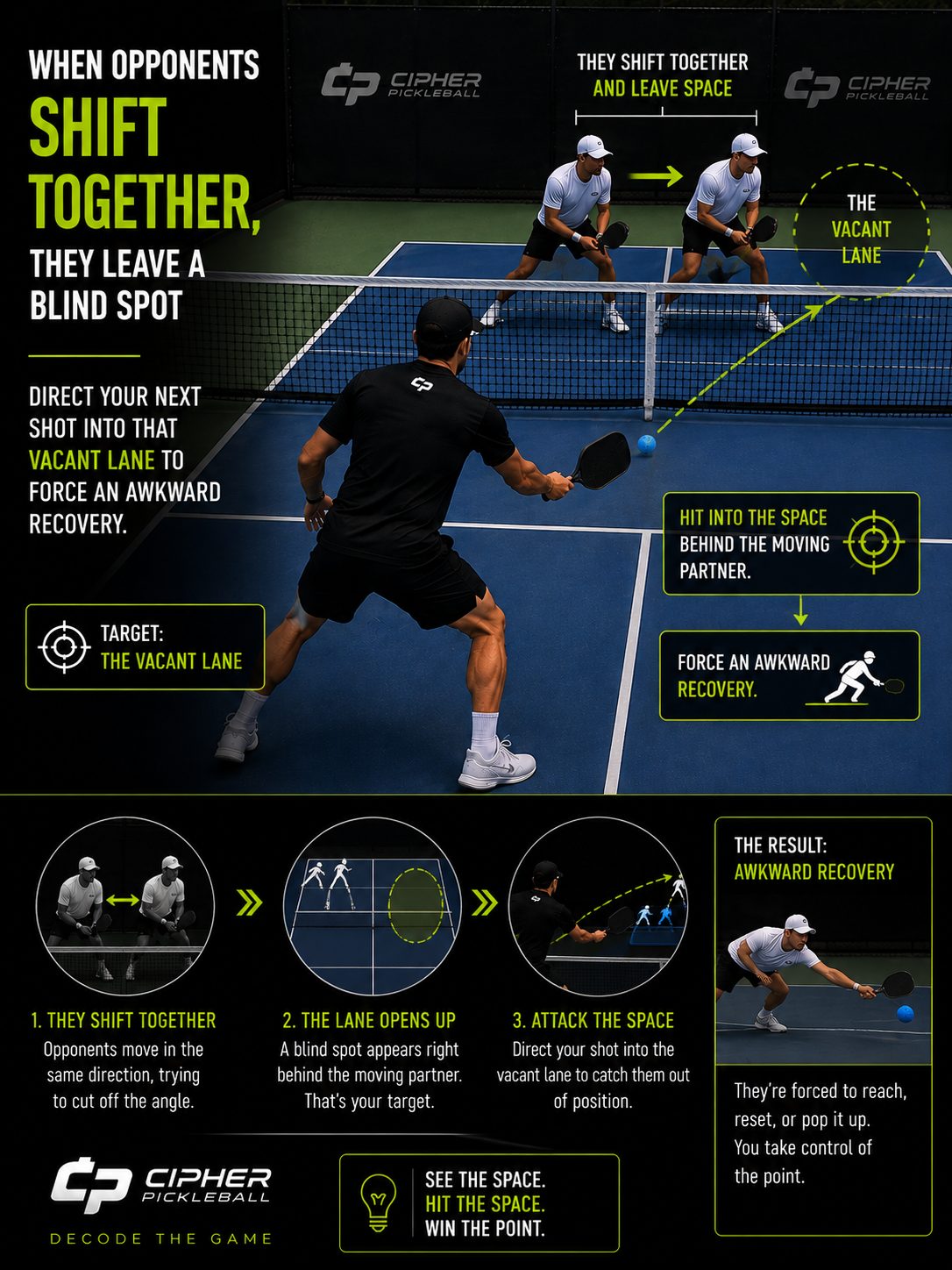
Tip 26 — Target the sliding foot to eliminate lateral recovery
When your opponents are moving laterally across the baseline or transition zone, their momentum dictates their next stroke. Most players focus entirely on the ball or the paddle p…
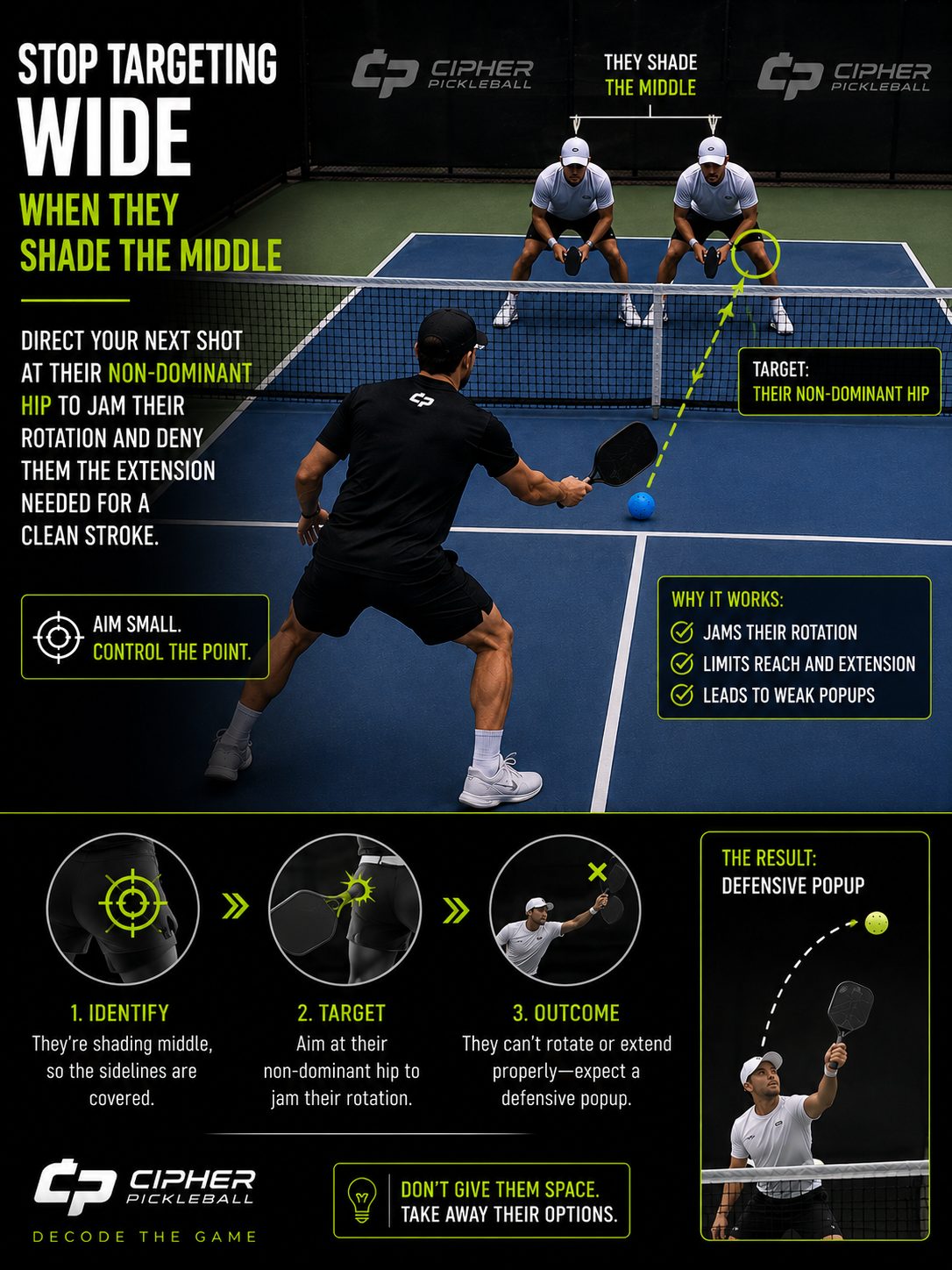
Tip 25 — Target the non-dominant hip to jam extension
Most players naturally rotate toward their dominant side when tracking a ball through the middle, inadvertently creating a mechanical blind spot on their off hip. When you recogni…
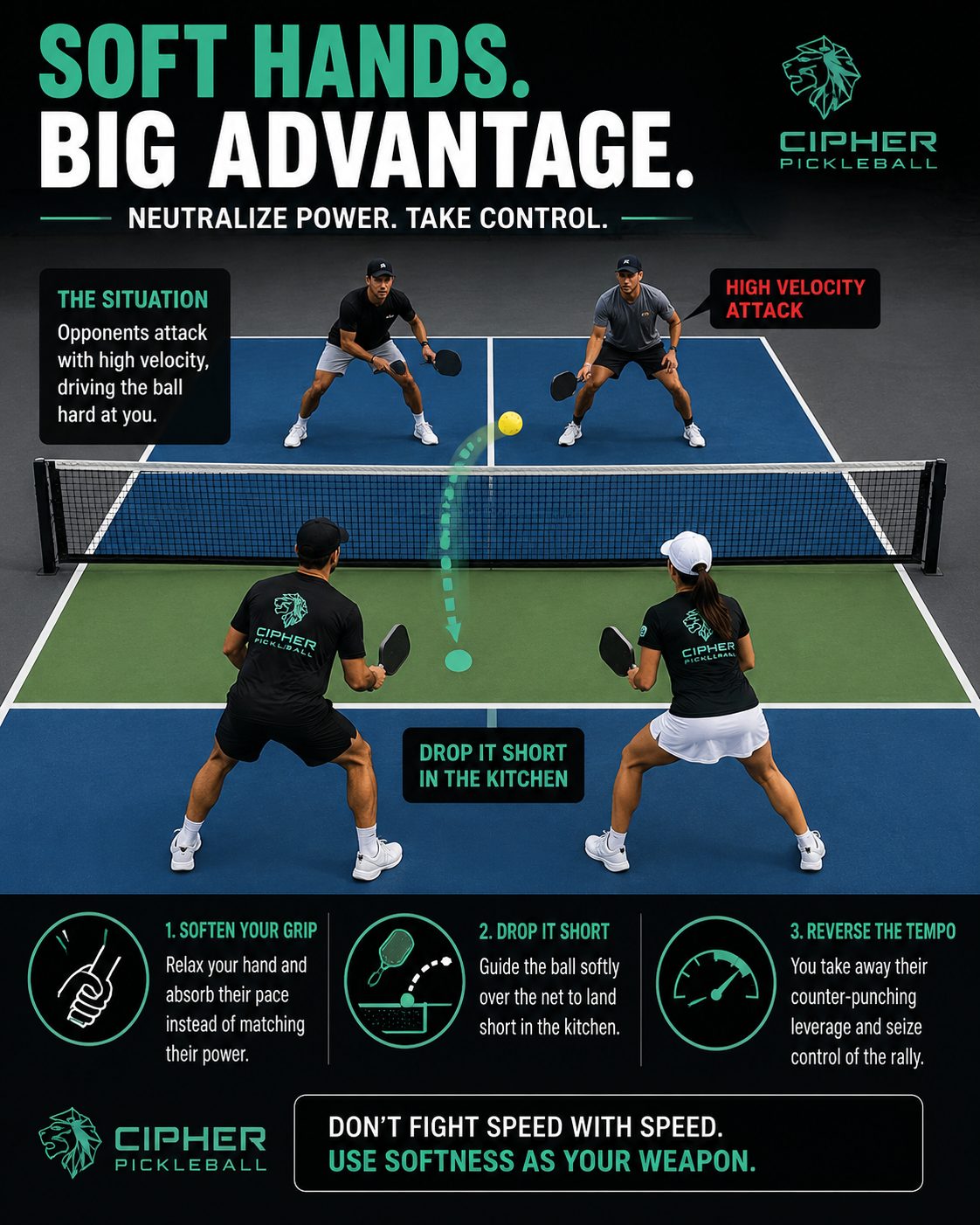
Tip 27 — Target the lead foot to halt forward momentum
When opponents charge the kitchen after a weak third shot, their primary objective is to establish net dominance while moving forward. Most players focus on driving the ball past …
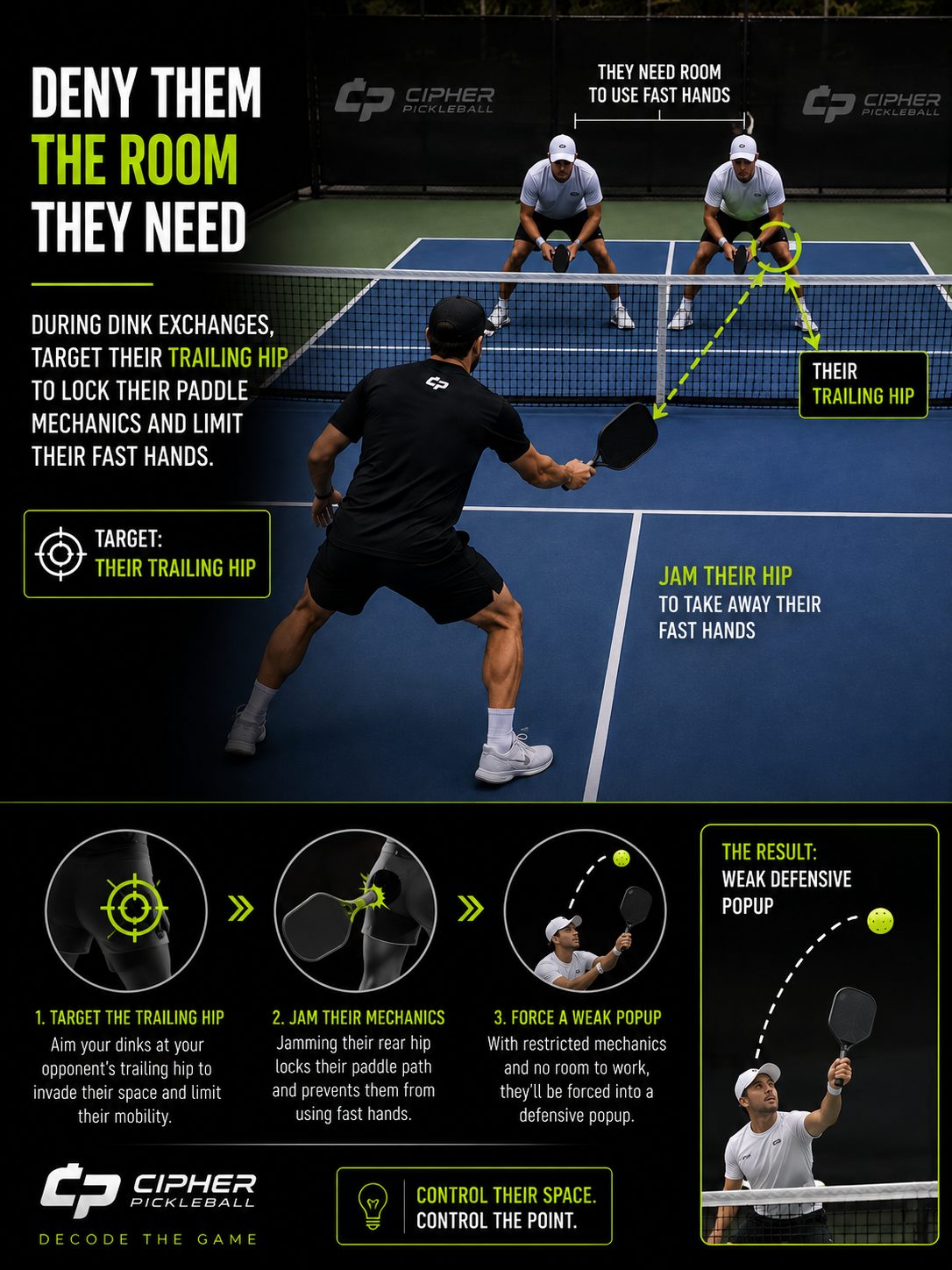
Tip 24 — Target the trailing hip to jam fast hands
When opponents crowd the kitchen line and prepare to unleash quick hands, they rely on rotational clearance to generate power and angle. If you redirect your next dink directly to…
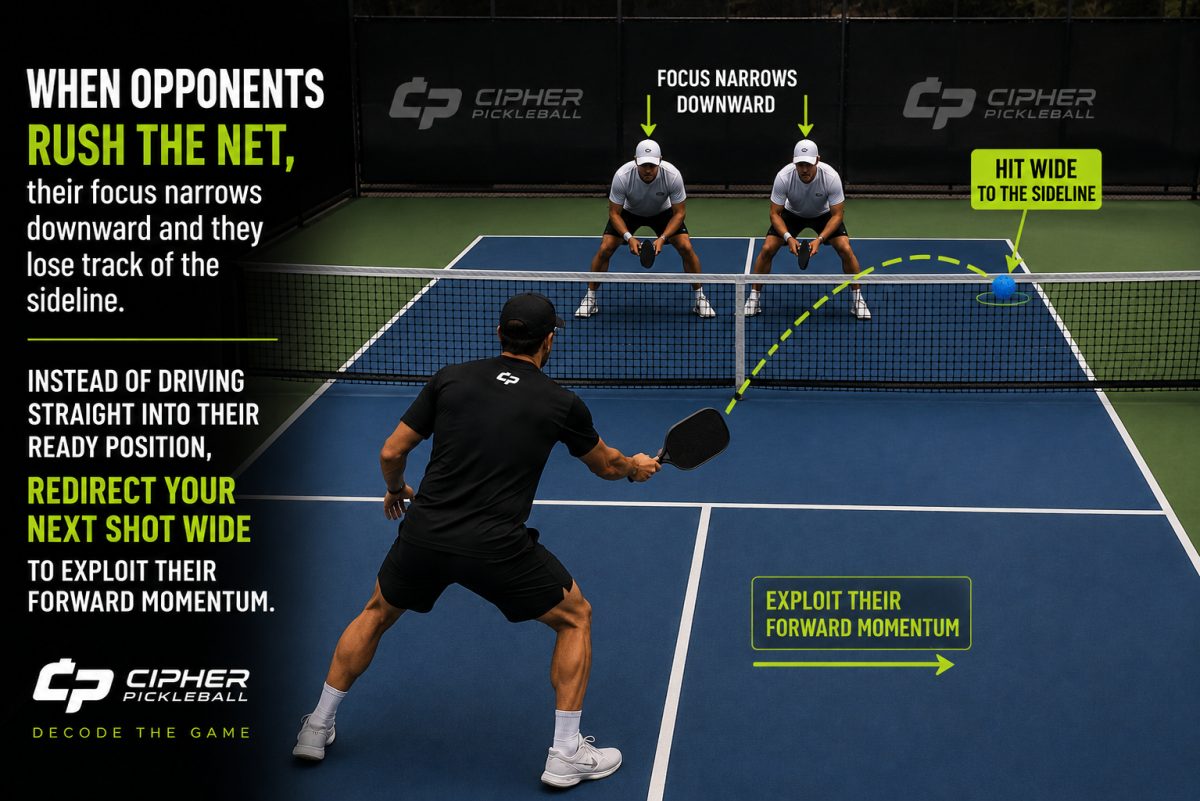
Tip 23 — Exploit the blind spot during transition
When your opponents transition from the baseline to the non-volley zone, their focus narrows downward to track the ball at their feet. They are blind to the player moving laterall…
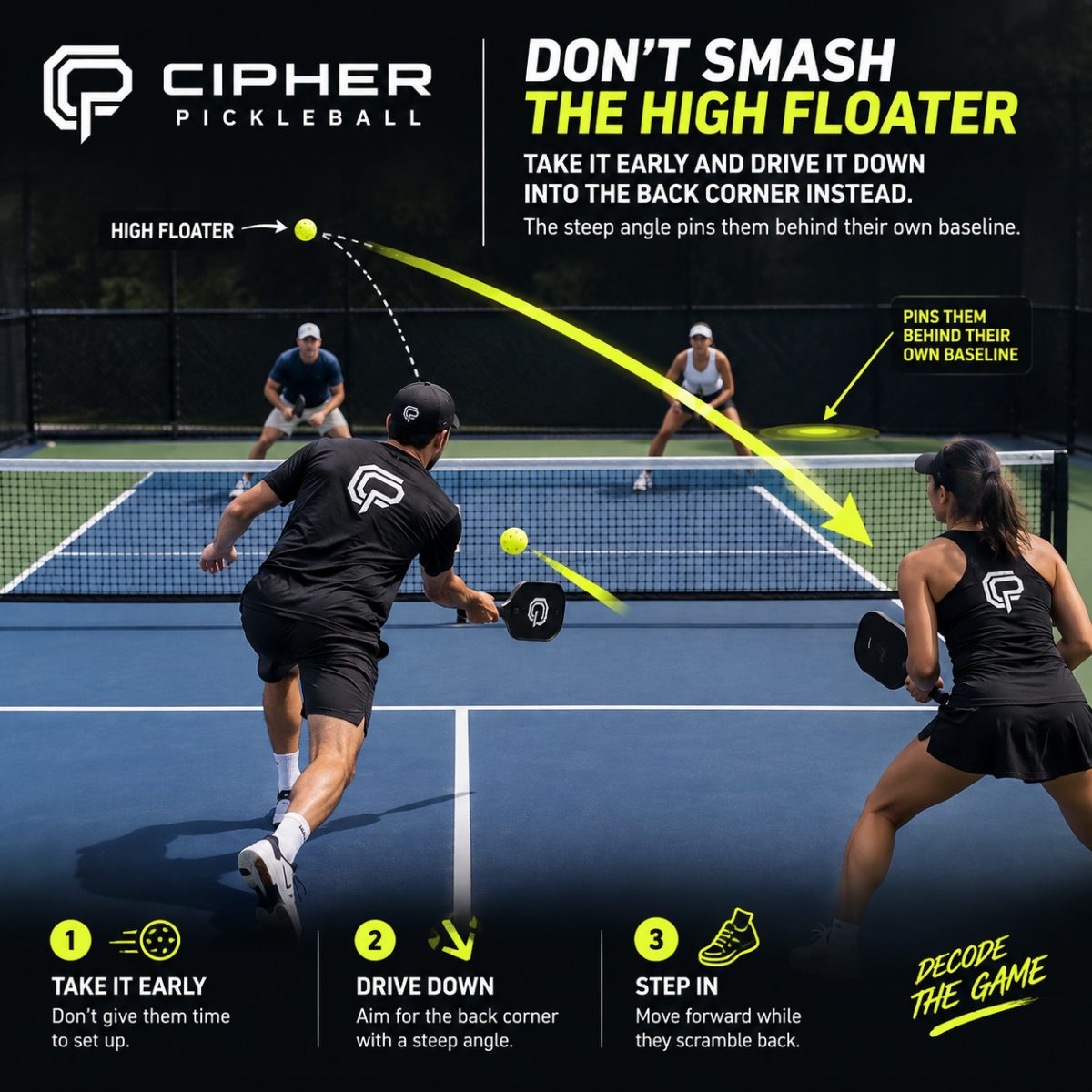
Tip 22 — Use the high bounce to pin opponents
A high, floating ball looks like a chance to smash it hard down the middle. Resist that. Take it early, on the rise, and drive it down into their back corner instead. That steep a…
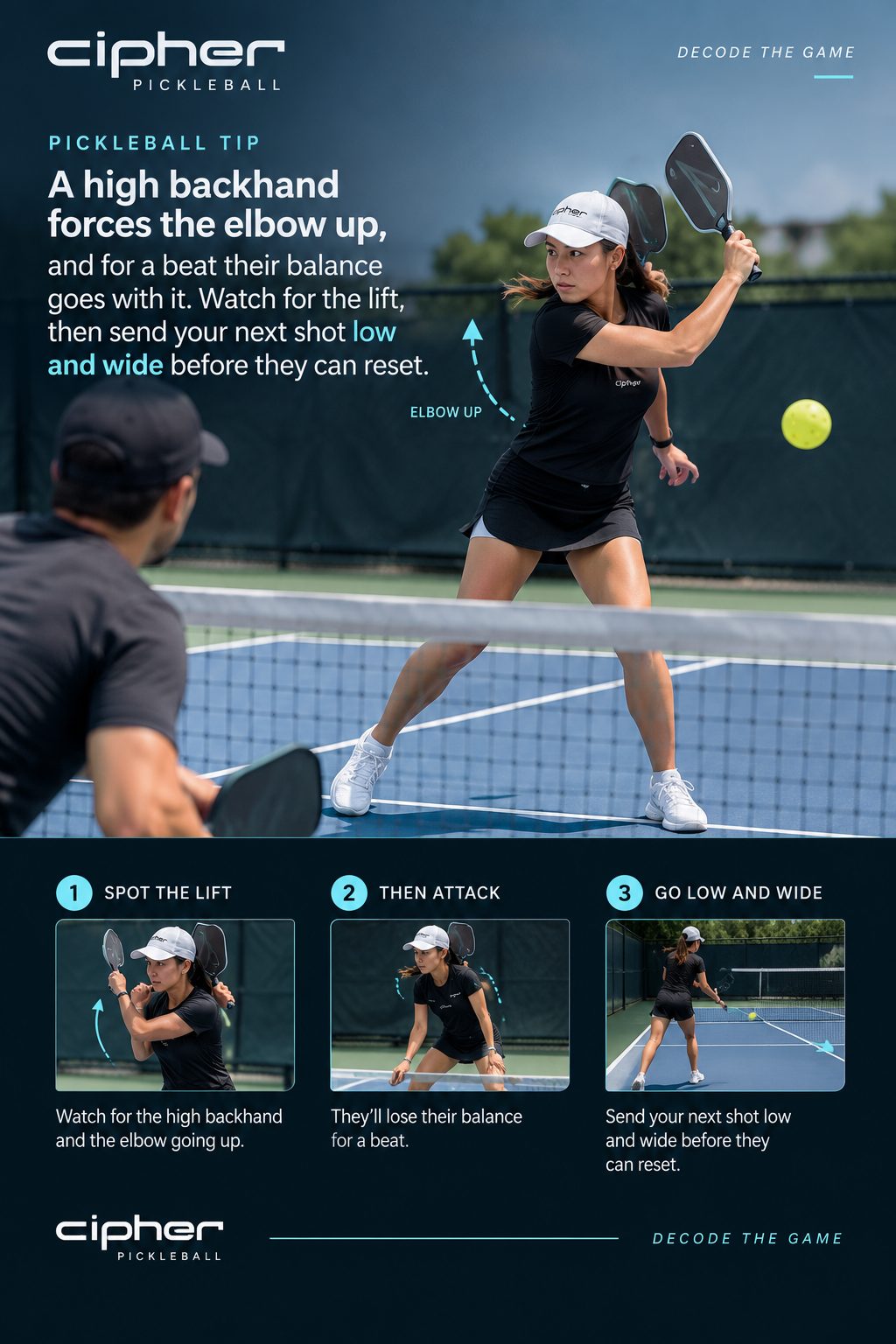
Tip 19 — Exploit the floating elbow on high backhands
A high backhand forces the elbow up to meet the ball — and for a split second, that lift breaks their balance. The shot that follows usually floats: short, soft, low on pace. Watc…
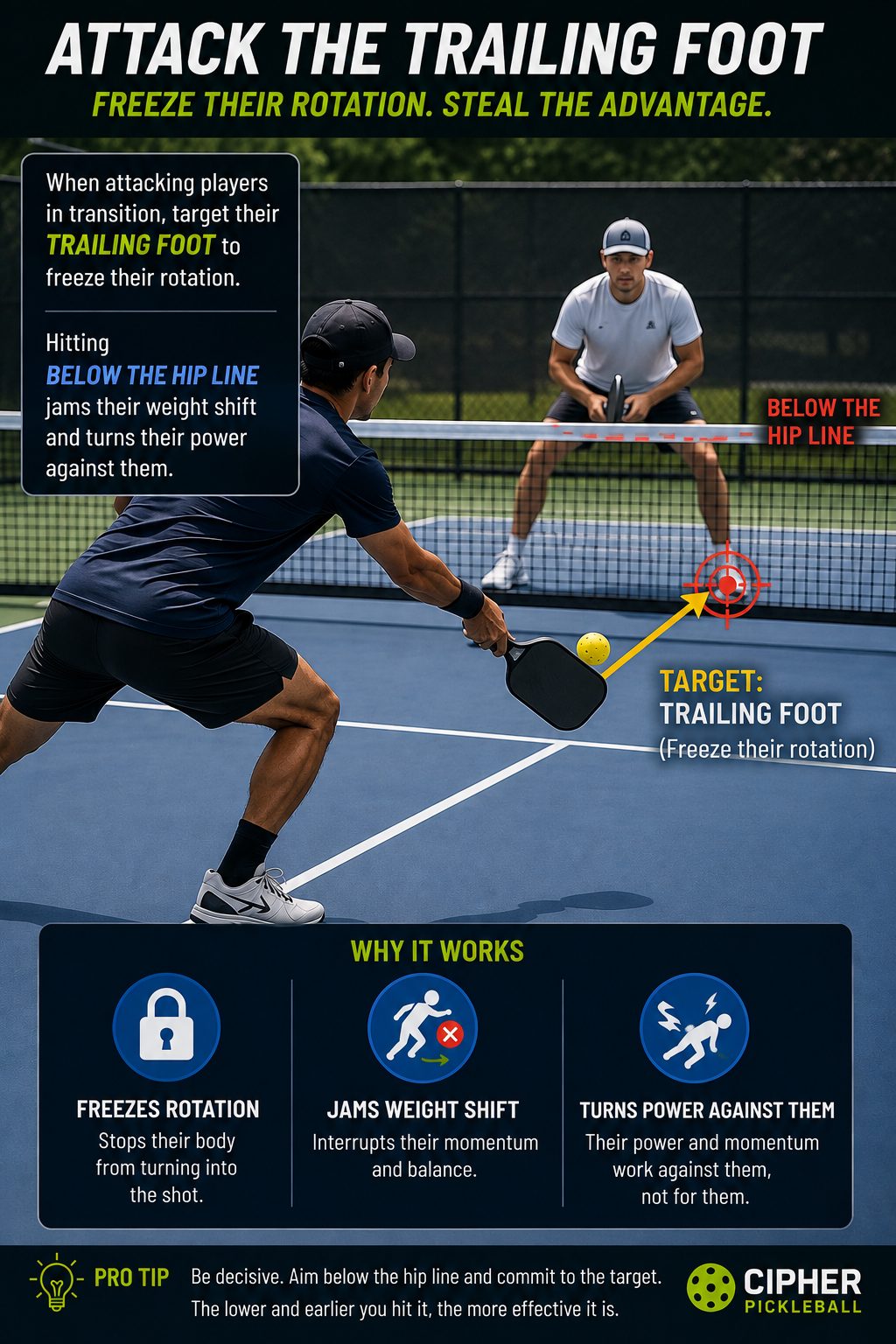
Tip 21 — Target the trailing foot to freeze rotation
When opponents attack from the transition zone, their momentum naturally carries them forward on their dominant side. To disrupt this forward trajectory, direct your counter-punch…
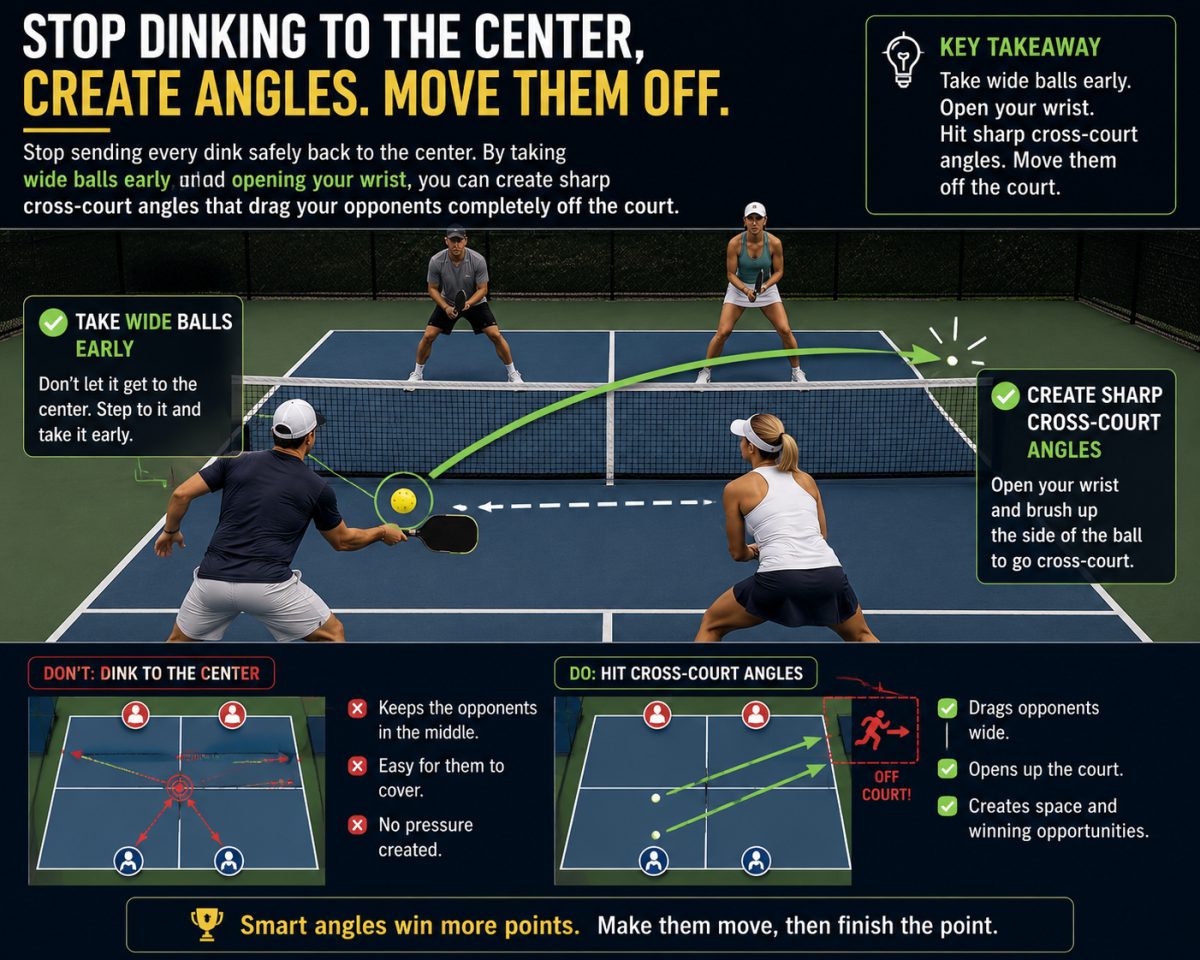
Tip 20 — Exploit the wide sideline with early angle creation
When you receive a dink near the sidelines, your instinct is often to return it safely down the line or cross-court to the center. Instead, treat the wide angle as a geometry prob…
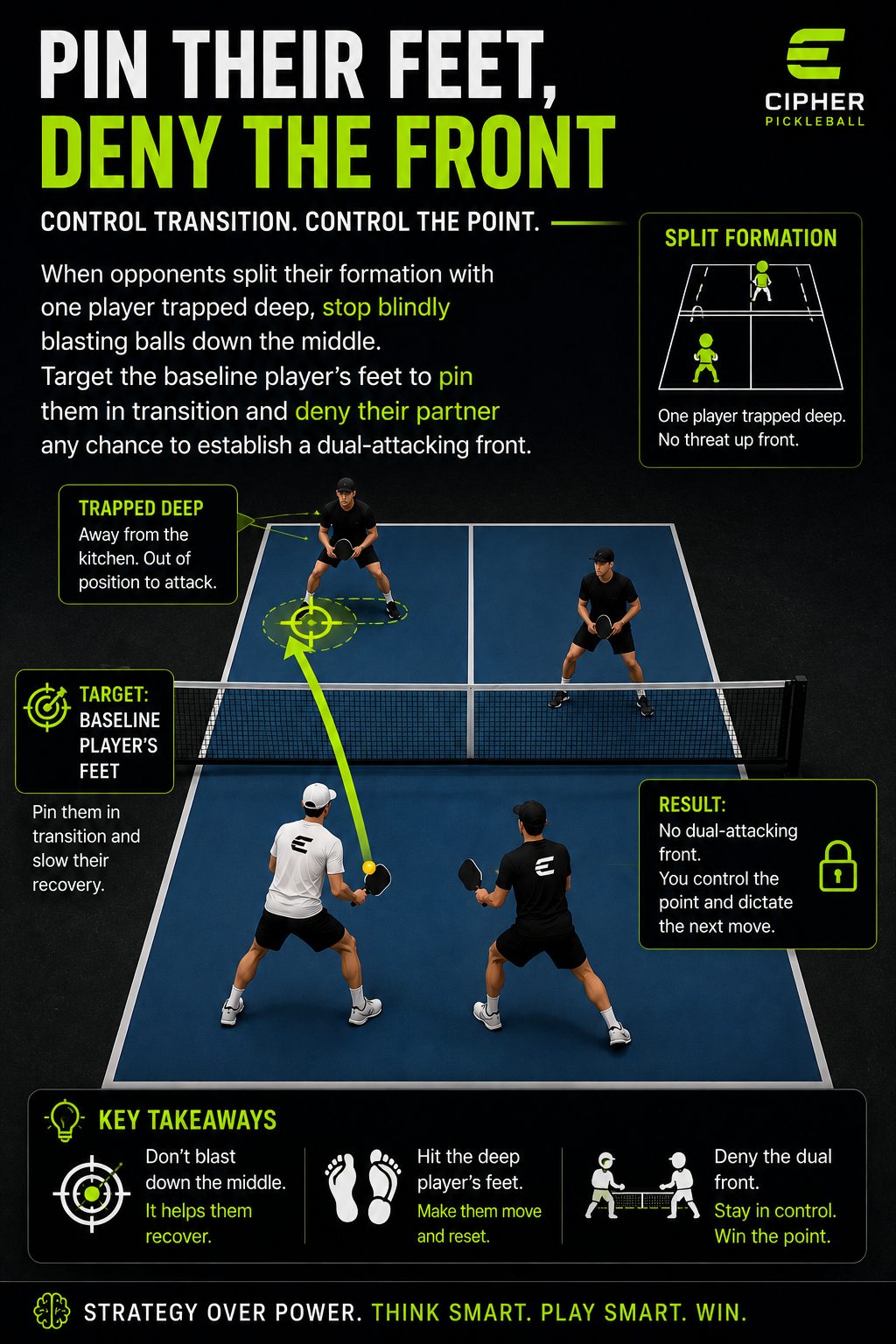
Tip 18 — Pin the partner at the baseline
When your opponents split their formation and one player is trapped deep while the other is established at the kitchen, resist the temptation to blindly blast the next ball down t…
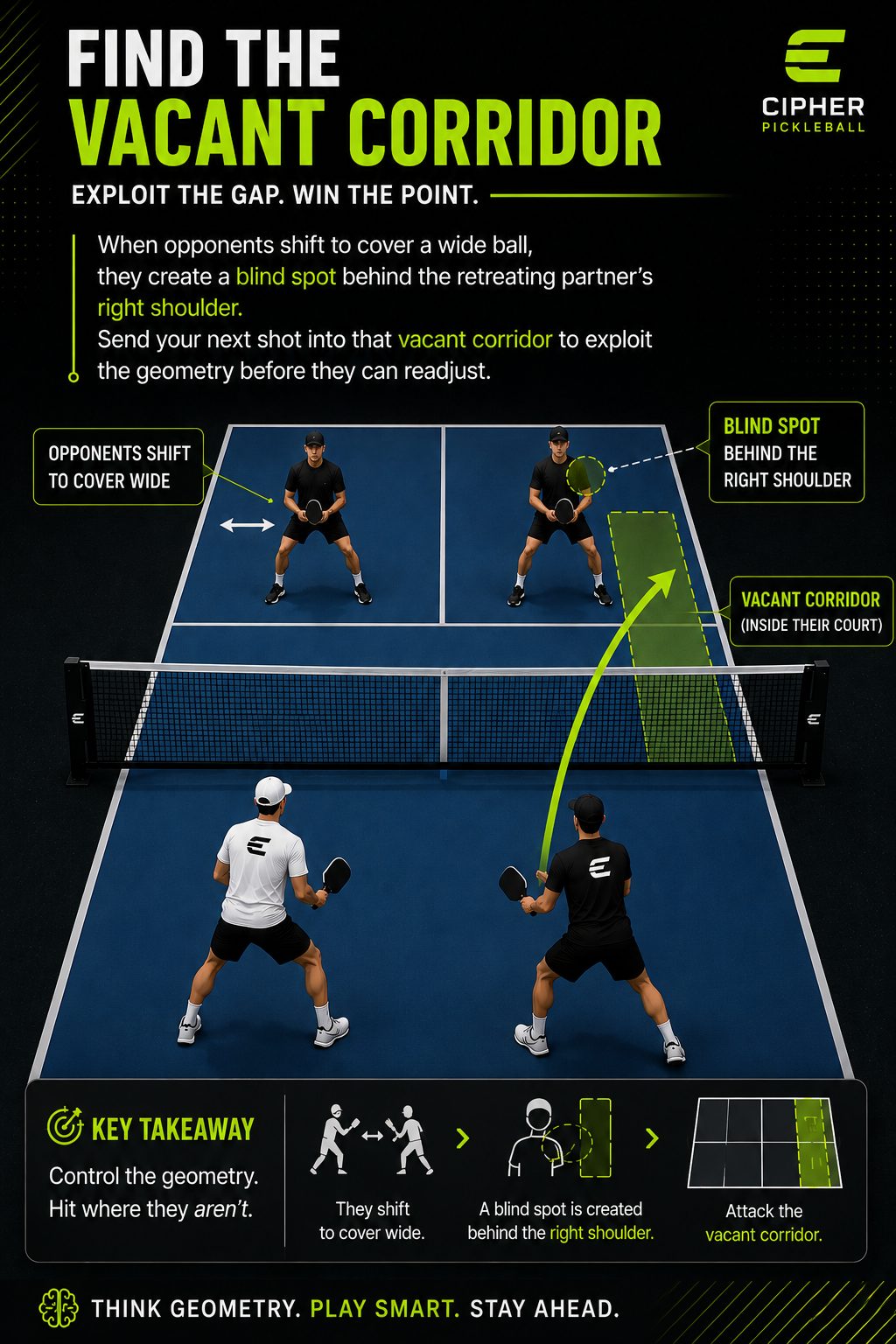
Tip 17 — Exploit the blind spot behind a moving partner
When your opponent crosses the court to cover a wide ball, they leave a temporary geometric blind spot directly behind their retreating partner's outside shoulder. Most players in…
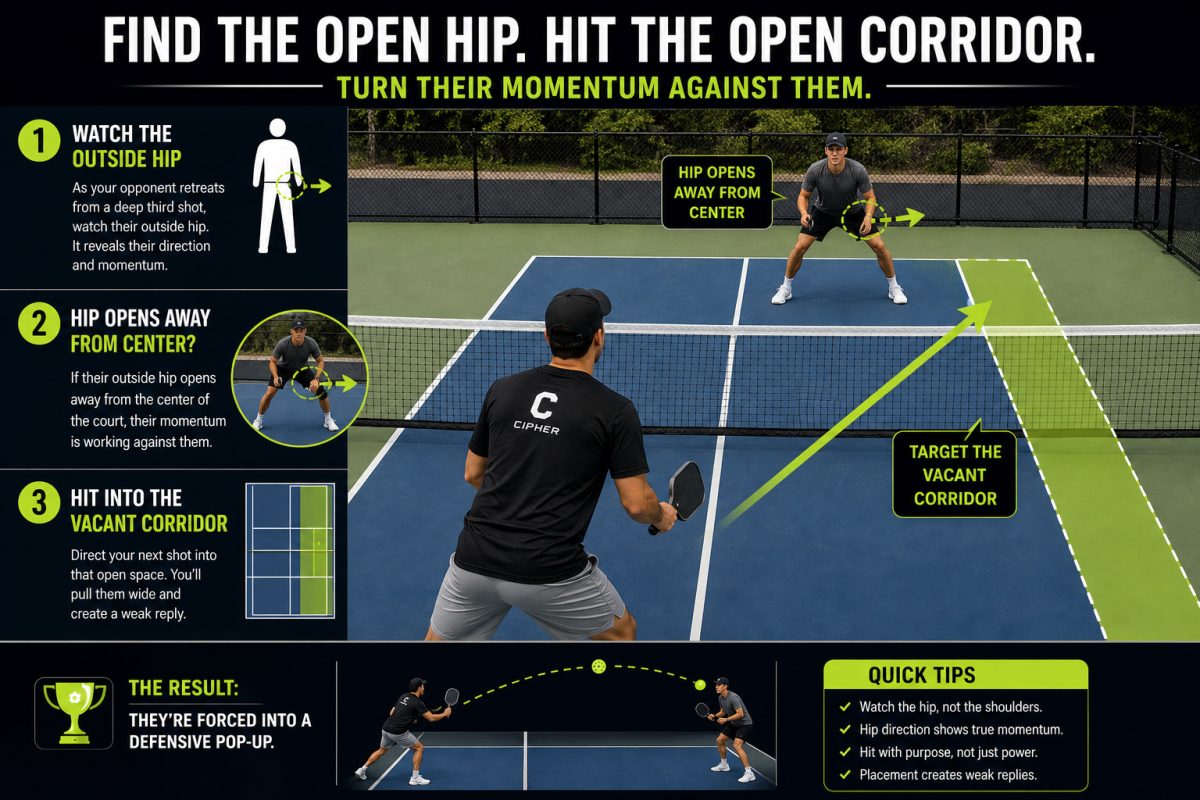
Tip 16 — Exploit the retreating hip to expose the center
When opponents hit a deep third shot, they almost always back up to establish position at the kitchen line. Watch their outside hip as they retreat. If that hip opens up away from…