Pickleball tips.
The same tips we send our mailing list — positioning, tempo, restraint, reading your opponent. to get new ones by email.
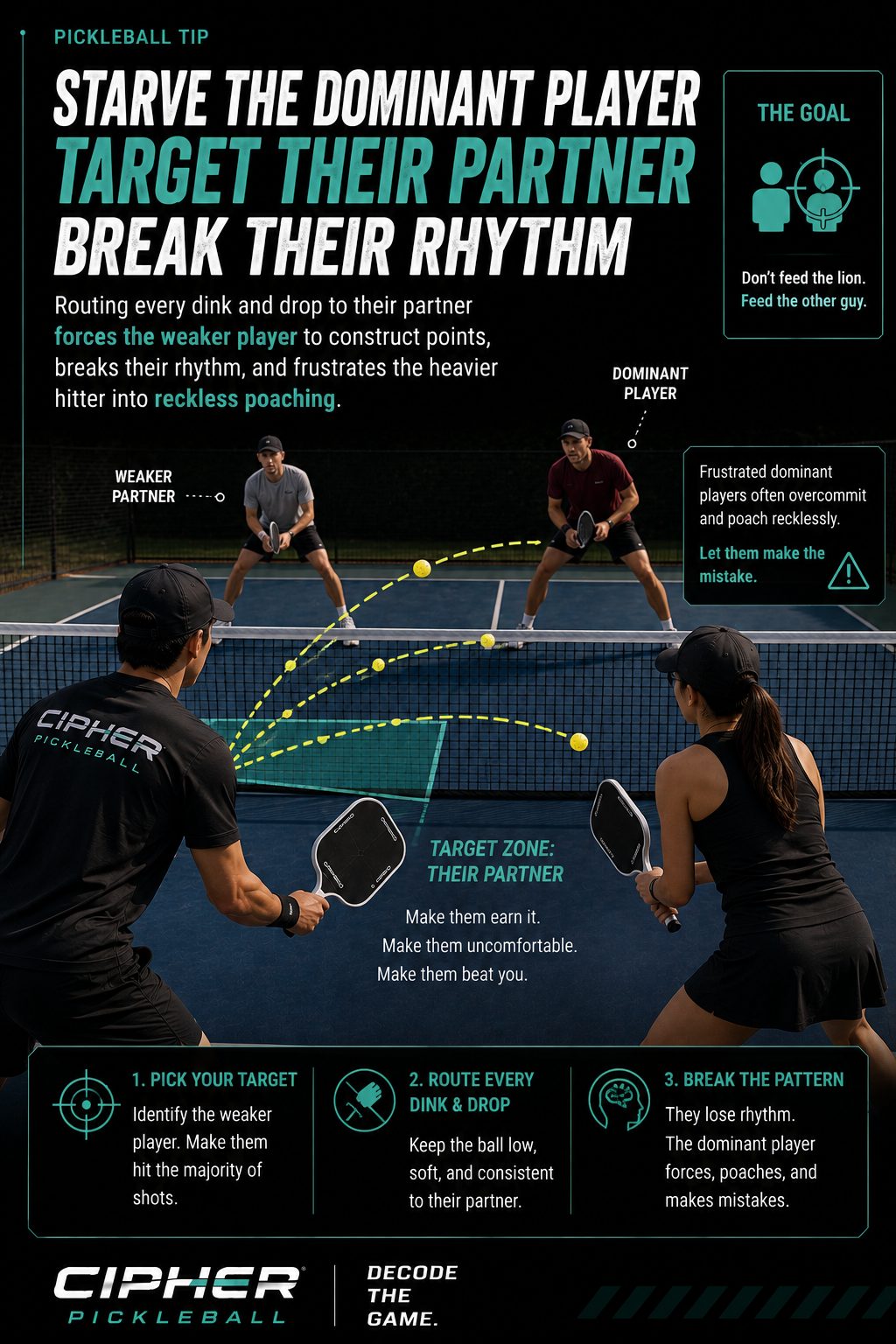
Tip 15 — Starve the dominant player by targeting weakness
When facing a team with an obviously stronger player who hovers near the middle, the statistical counter is simple: starve them of contact. The instinct is to test your skills aga…
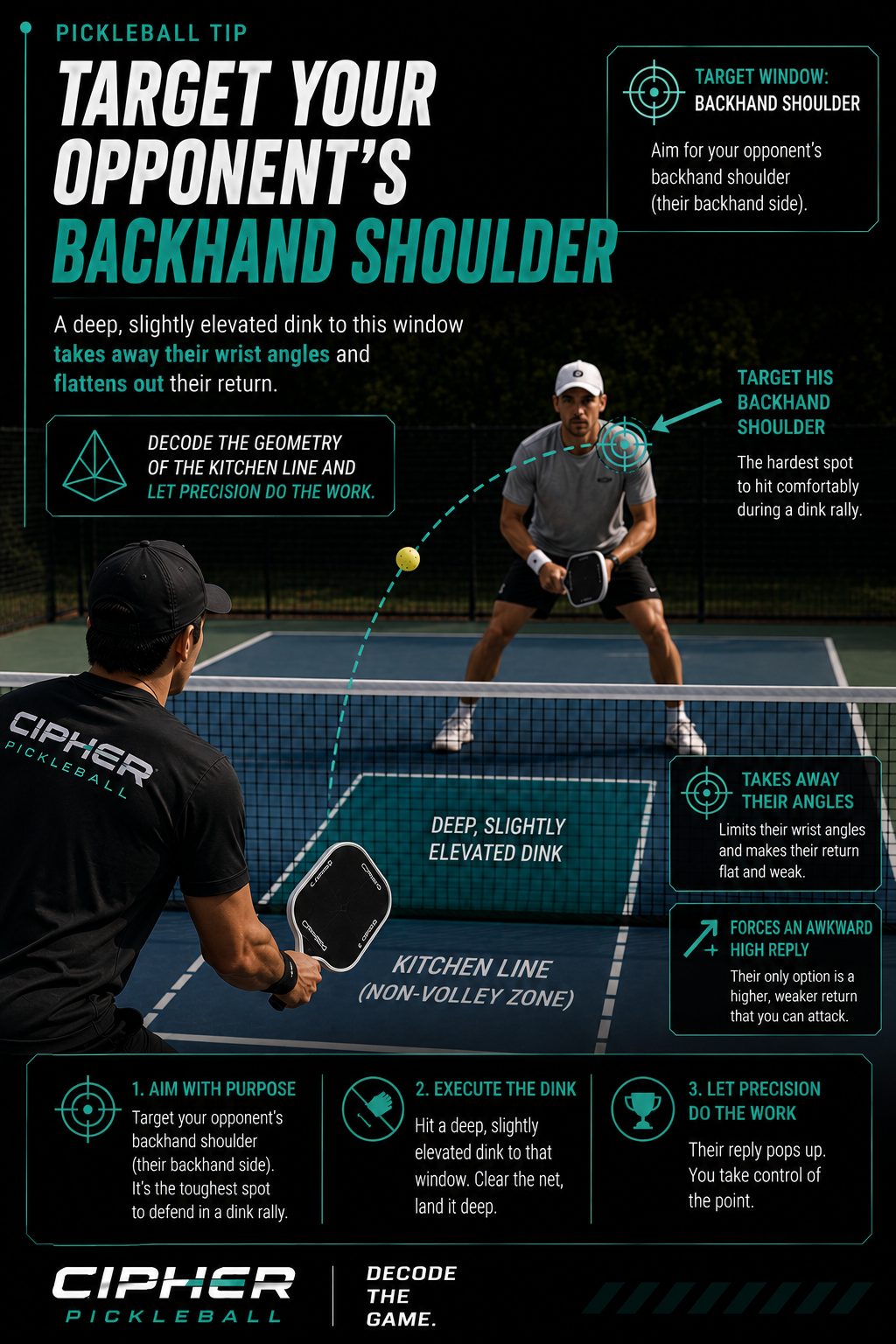
Tip 14 — Exploit the backhand shoulder during dink exchanges
When engaged in a prolonged dink rally, players often focus exclusively on cross-court angles or pushing the ball to their opponent's feet. A more reliable geometric pressure poin…
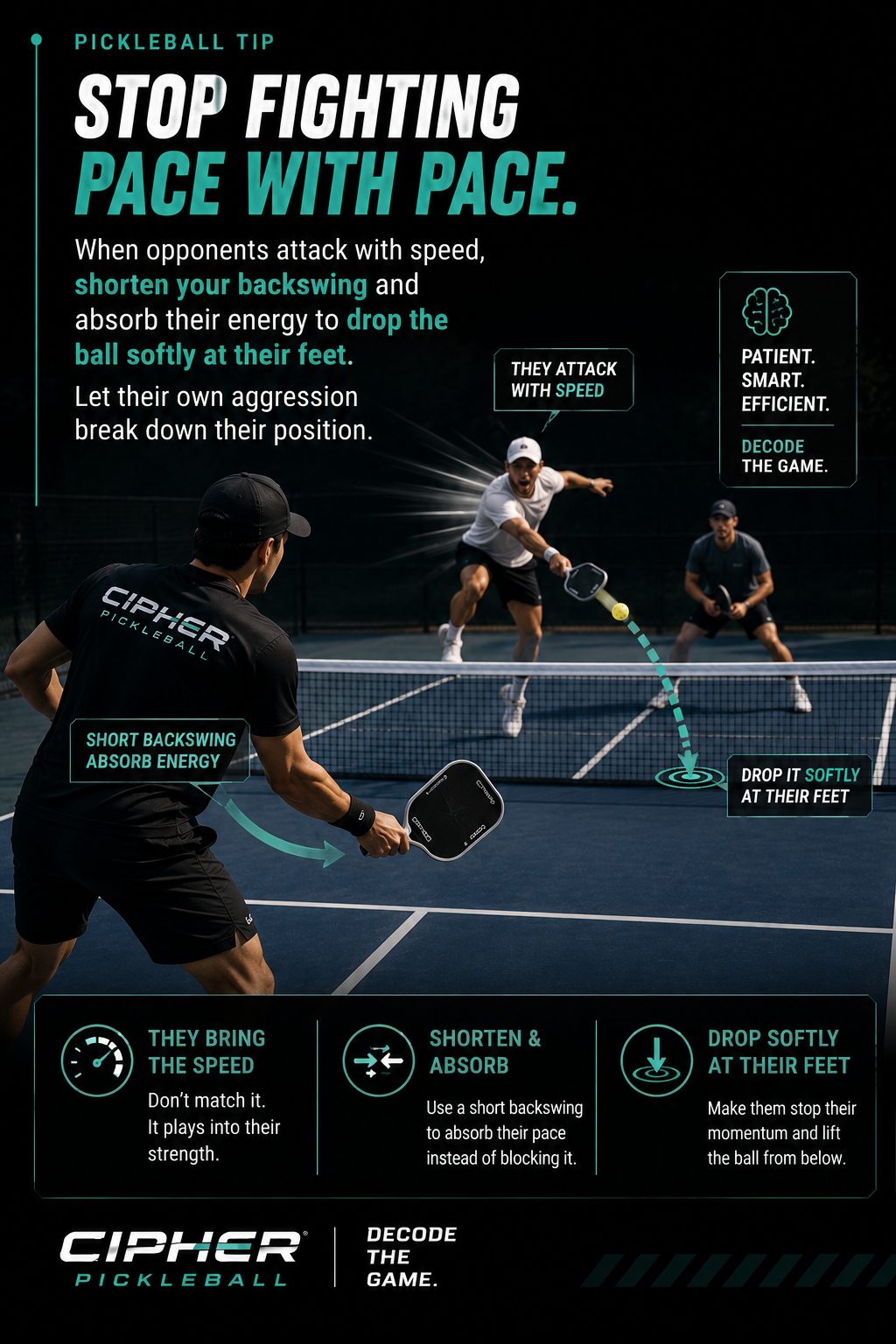
Tip 13 — Use pace absorption to neutralize fast hands
When opponents attack with high pace from the midcourt, your instinct is often to fire back with equal force. This plays directly into their hand, as fast exchanges favor the play…
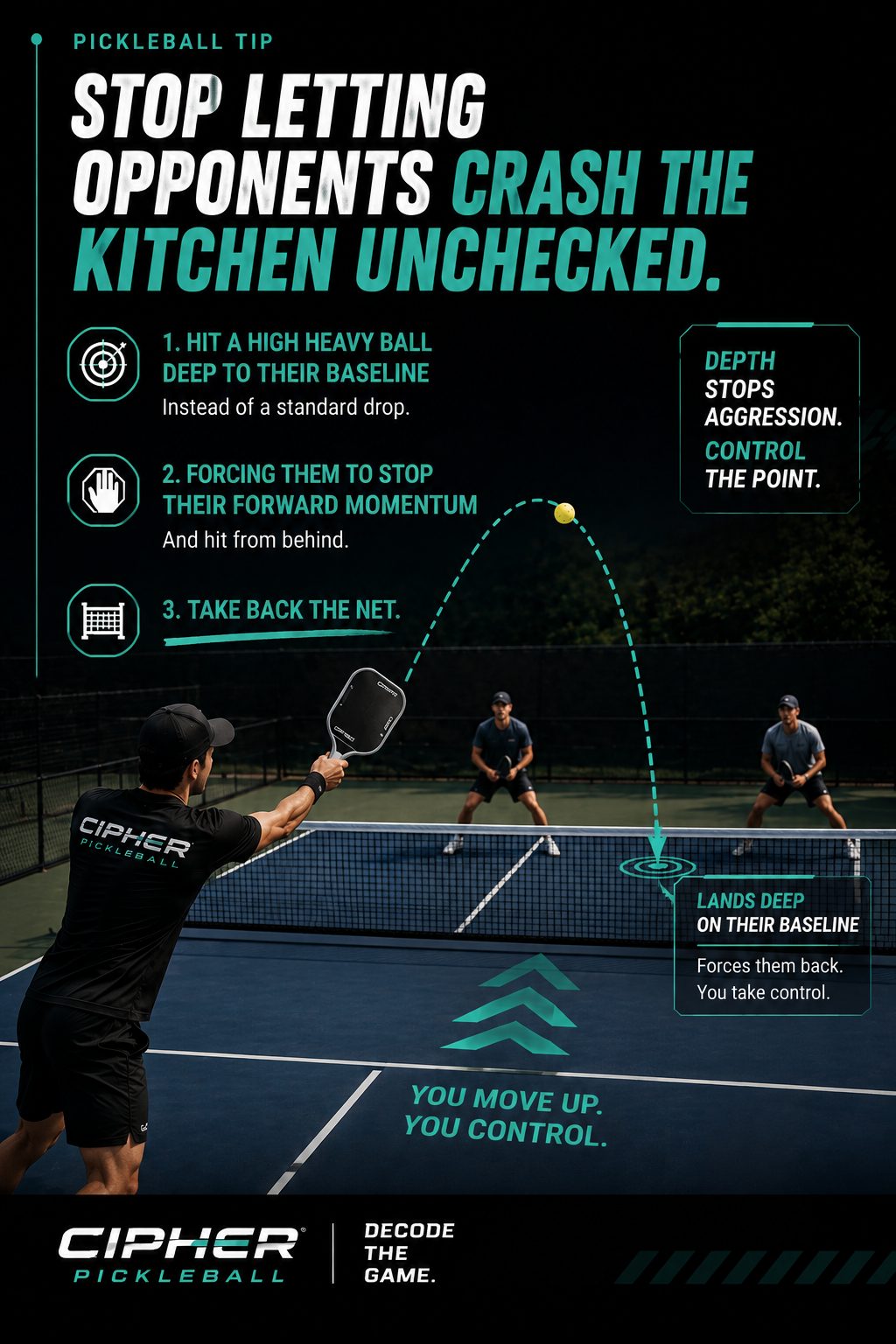
Tip 12 — Pin the returner with a high heavy ball
When facing an opponent who likes to crash the kitchen immediately off the return, alter the geometry of your third shot. Instead of driving low or dropping softly into the zone, …
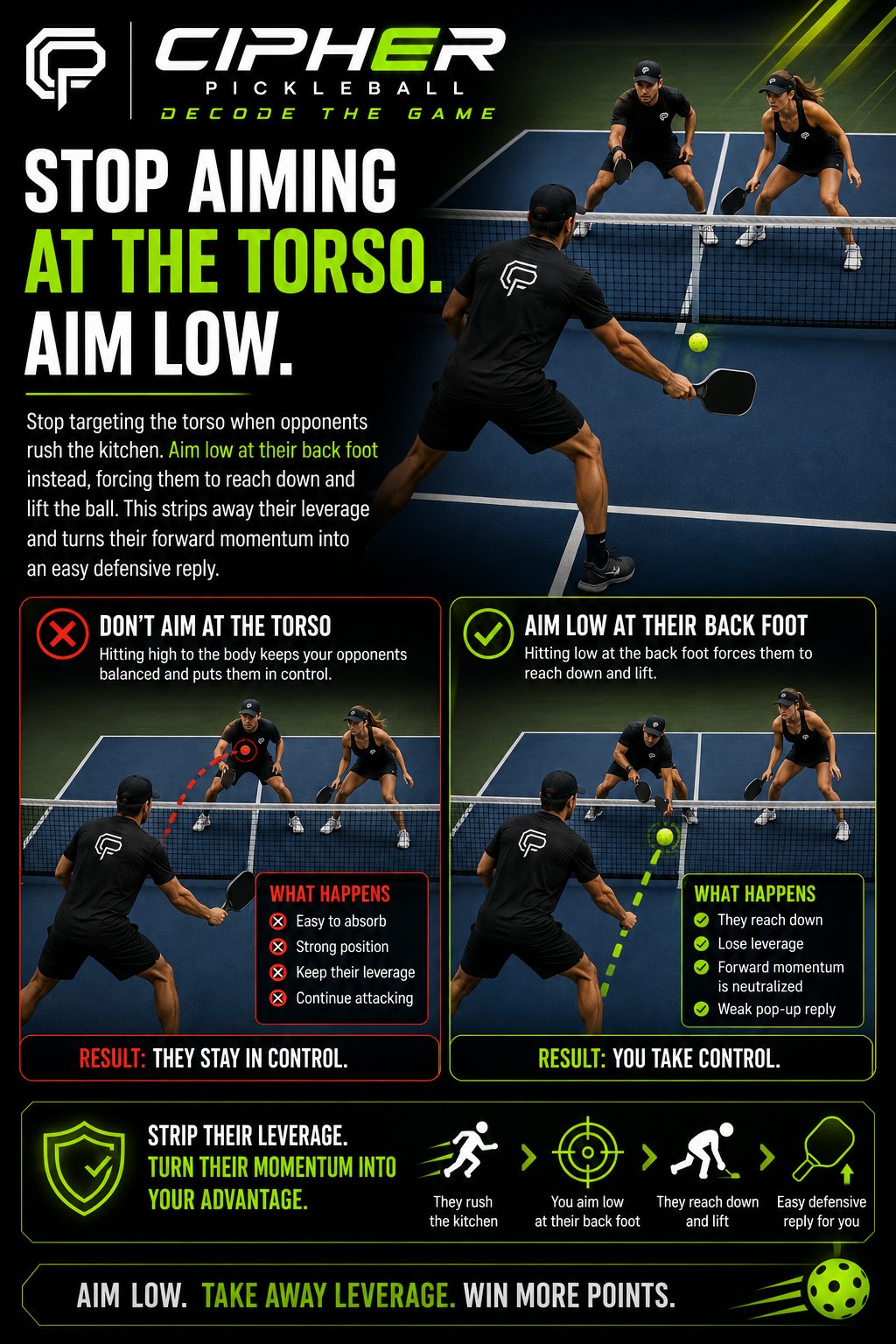
Tip 11 — Target the back foot during transitions
When opponents charge the kitchen from the transition zone, most players instinctively drive the ball toward their chest or torso. This often results in a pop-up because the strik…
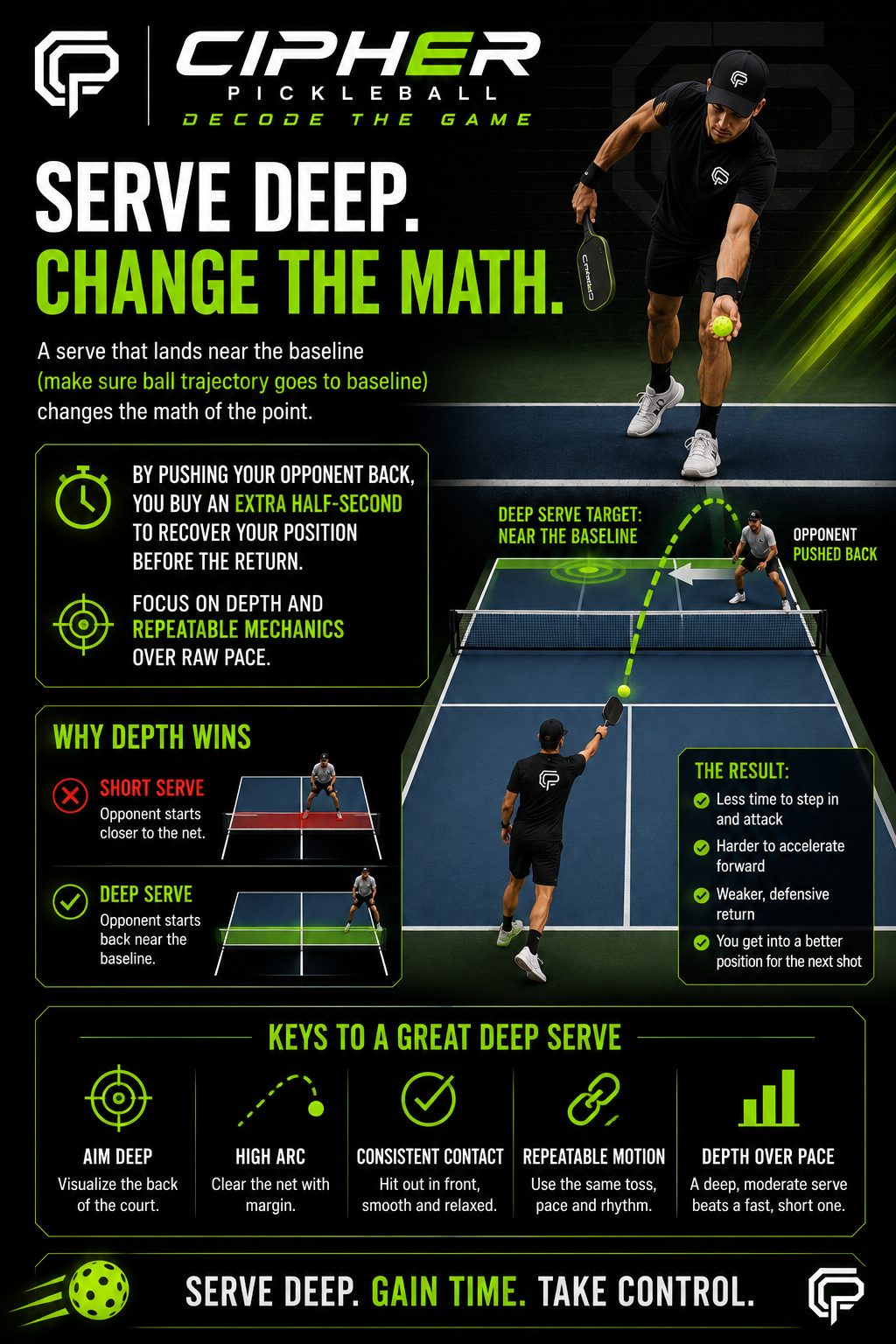
Tip 04 — A deeper serve buys you a slower game
A serve that lands short gives your opponent time to step in and attack early. A serve that lands deep, near the baseline, pushes them back and buys you an extra half-second befor…
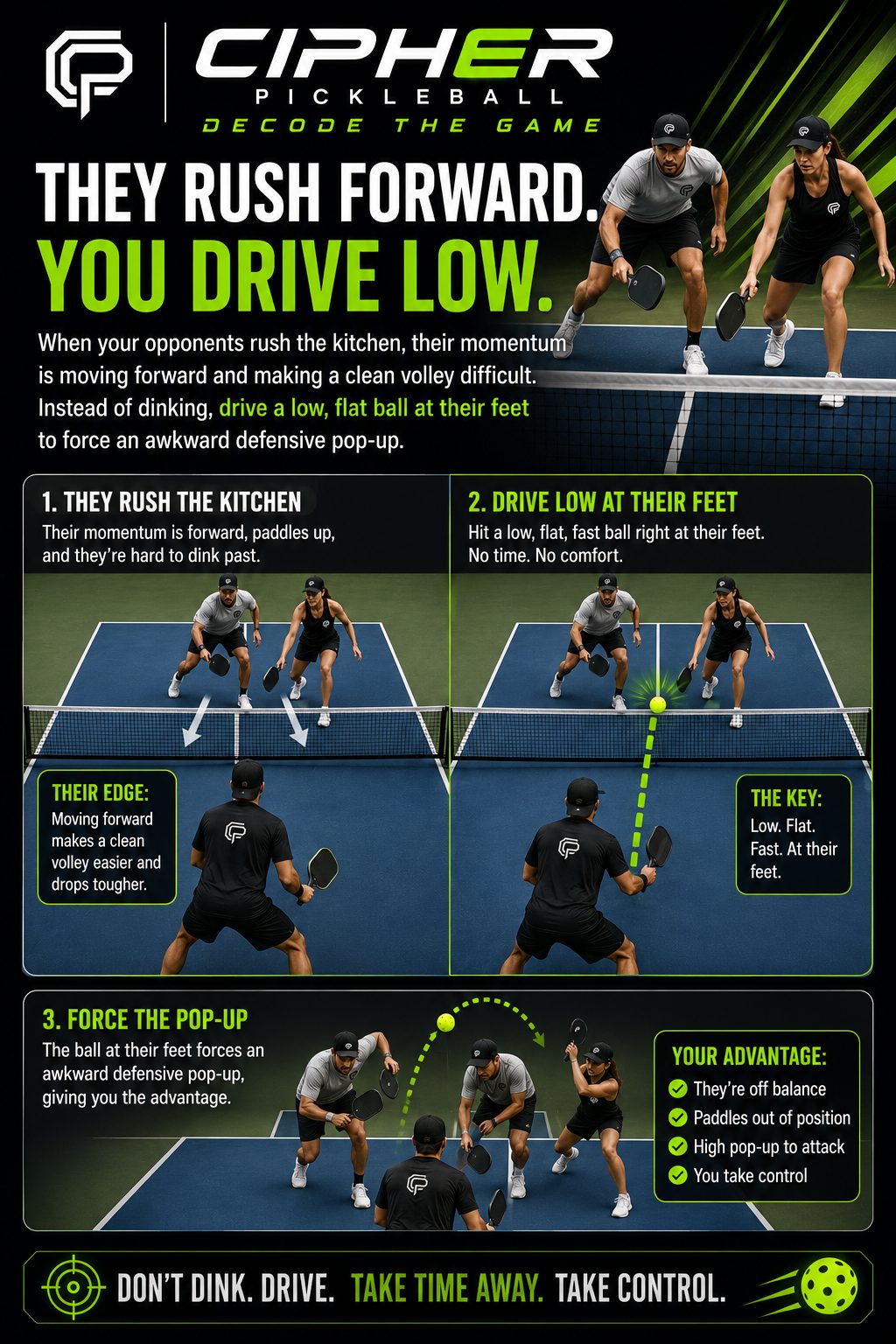
Tip 10 — Exploit the transition zone with low drives
When opponents move from the baseline toward the kitchen, they enter the transition zone with their momentum carrying them forward. This is the exact moment to alter your strategy…
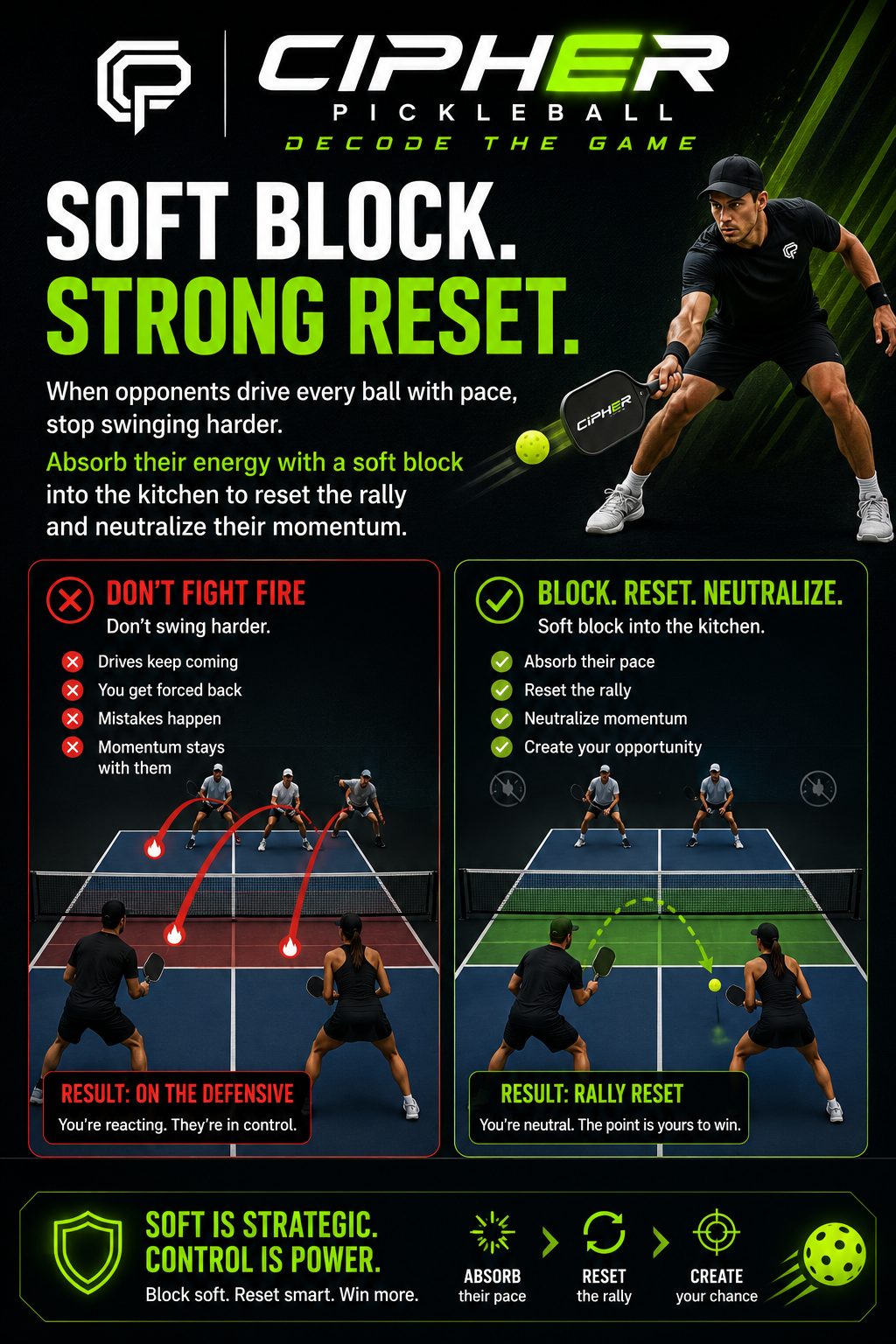
Tip 09 — Use the reset to break their momentum
When opponents start driving every ball with pace, the instinct is often to swing back harder. Decode their intent instead. They are trying to speed up the tempo to force an error…
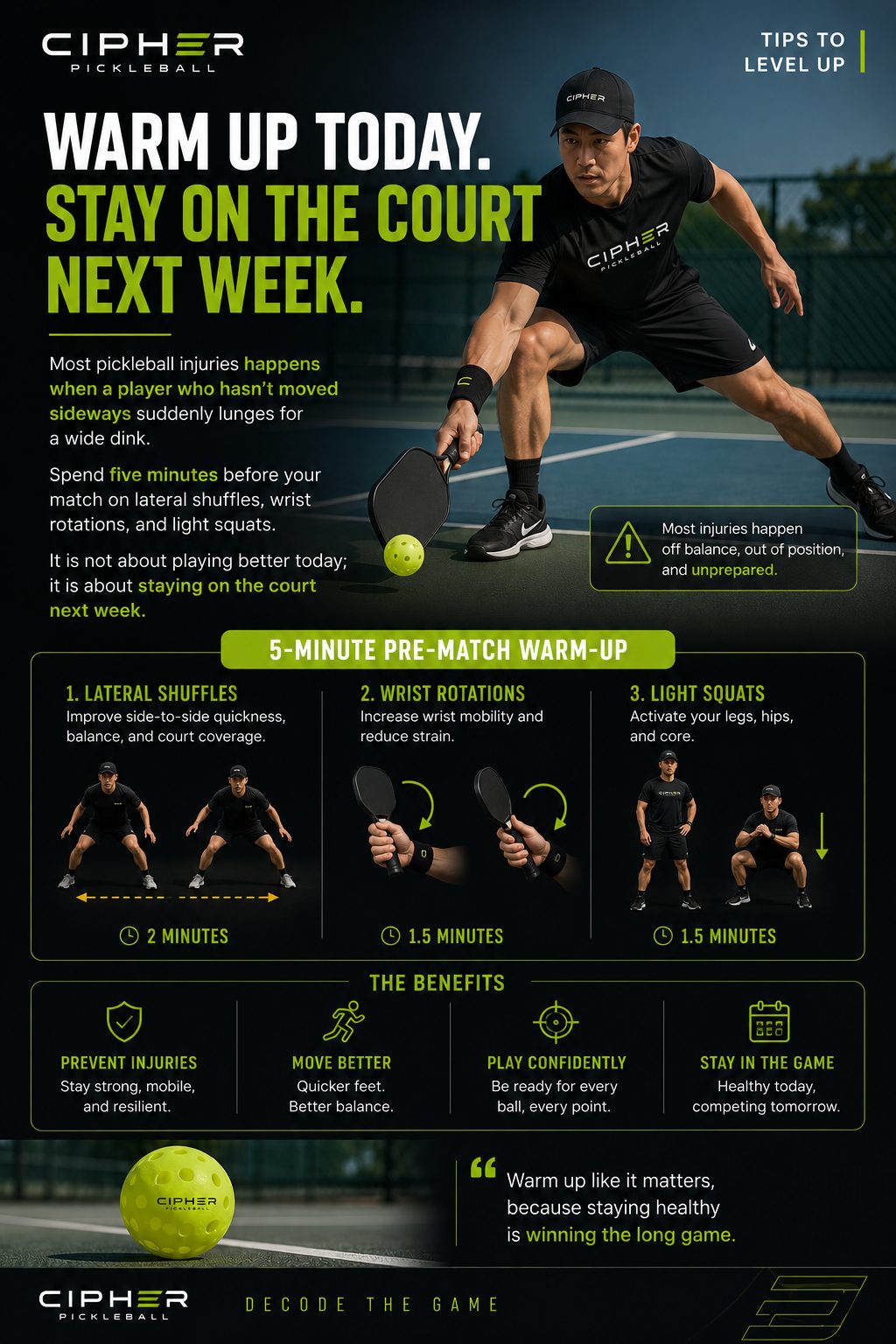
Tip 08 — Five minutes before you play
Most pickleball injuries — rolled ankles, tweaked shoulders, tennis elbow — don't happen on some freak point. They happen when a player who hasn't moved sideways all day suddenly …
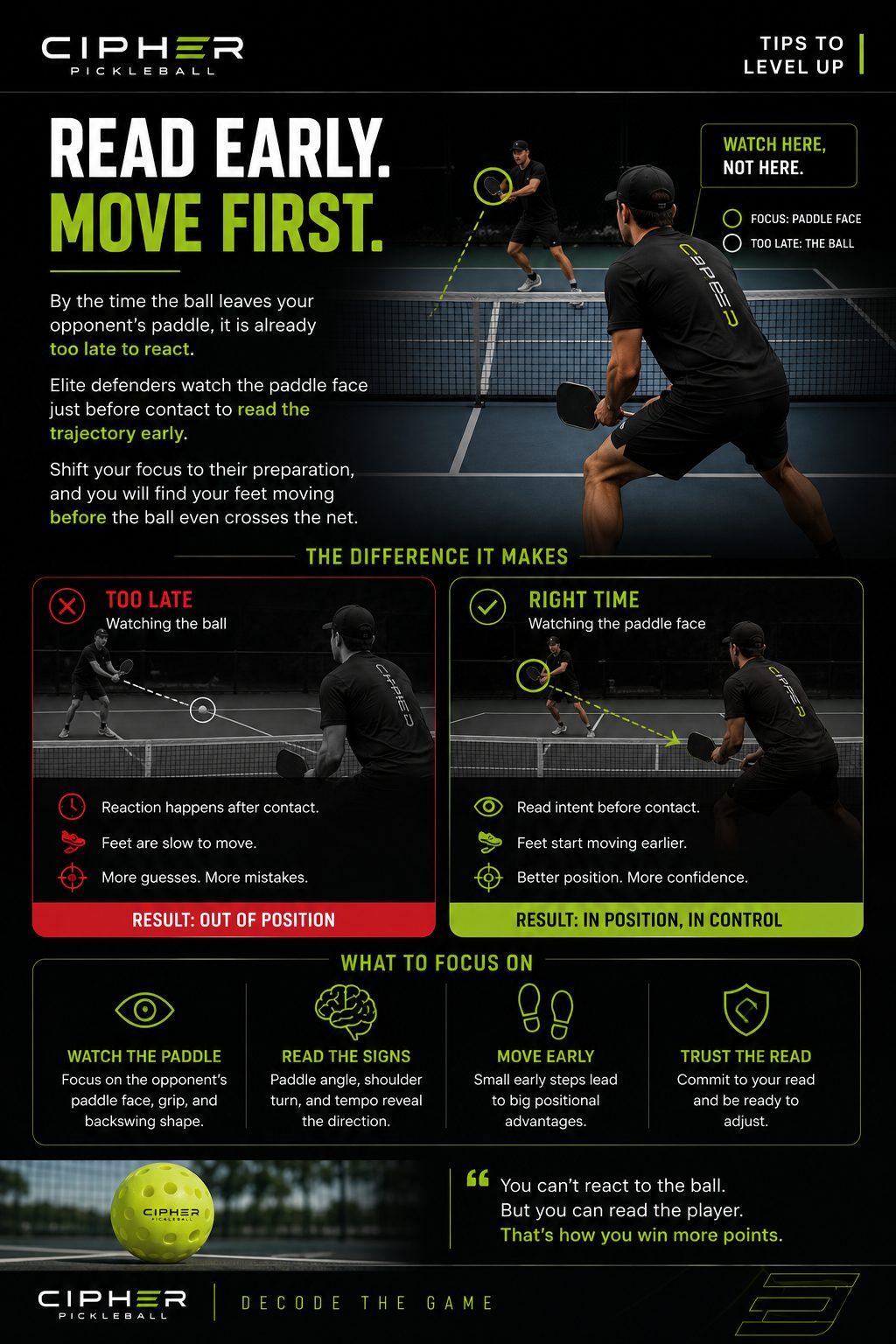
Tip 07 — Read the paddle face, not the ball
By the time the ball leaves your opponent's paddle, it's already too late to start reacting — you're just guessing correctly or incorrectly. The players who look unfairly fast are…
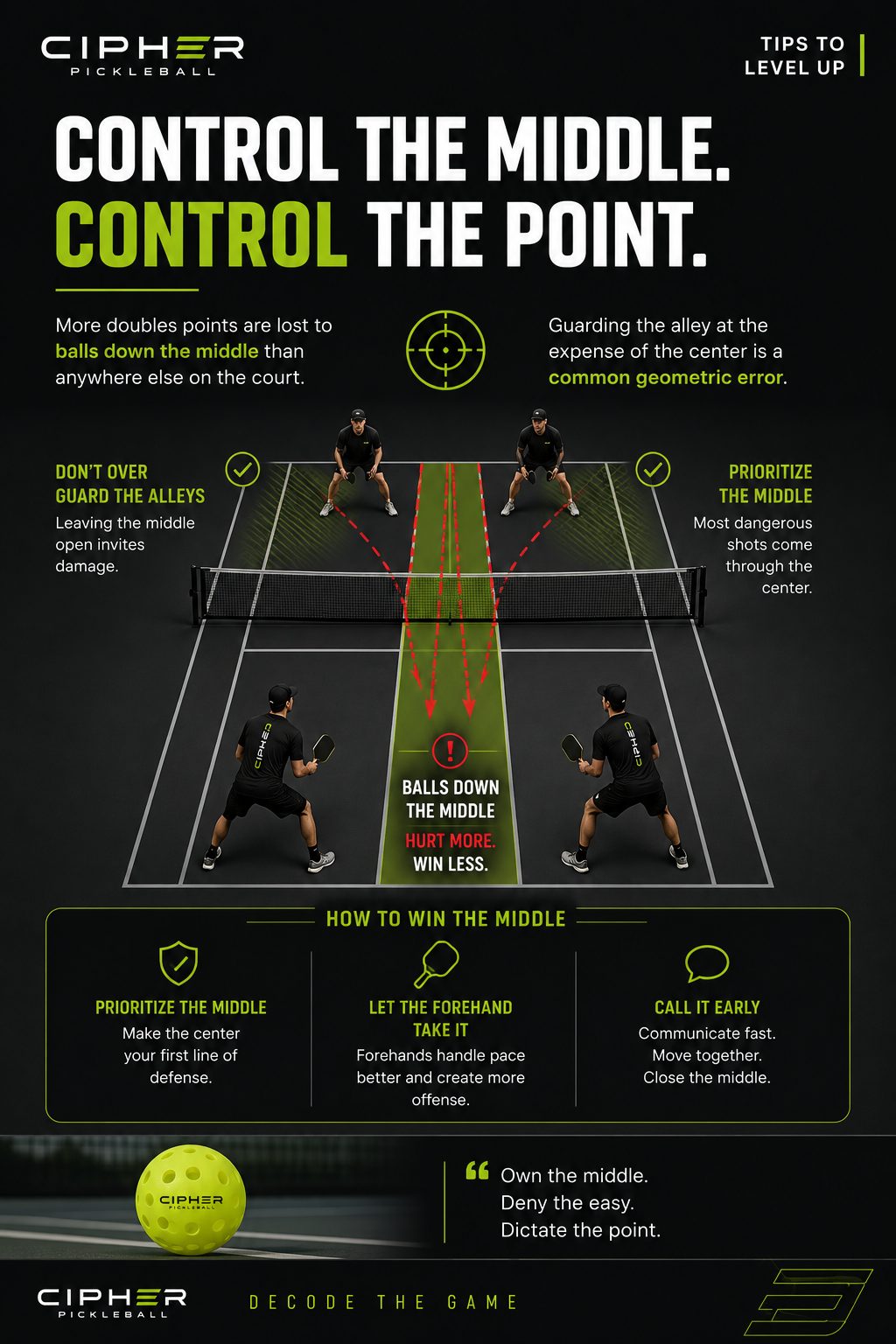
Tip 06 — Cover the middle first
In doubles, more points are lost to two partners watching the same ball go by up the middle than to any shot down the line. The middle is the highest-percentage target on the cour…
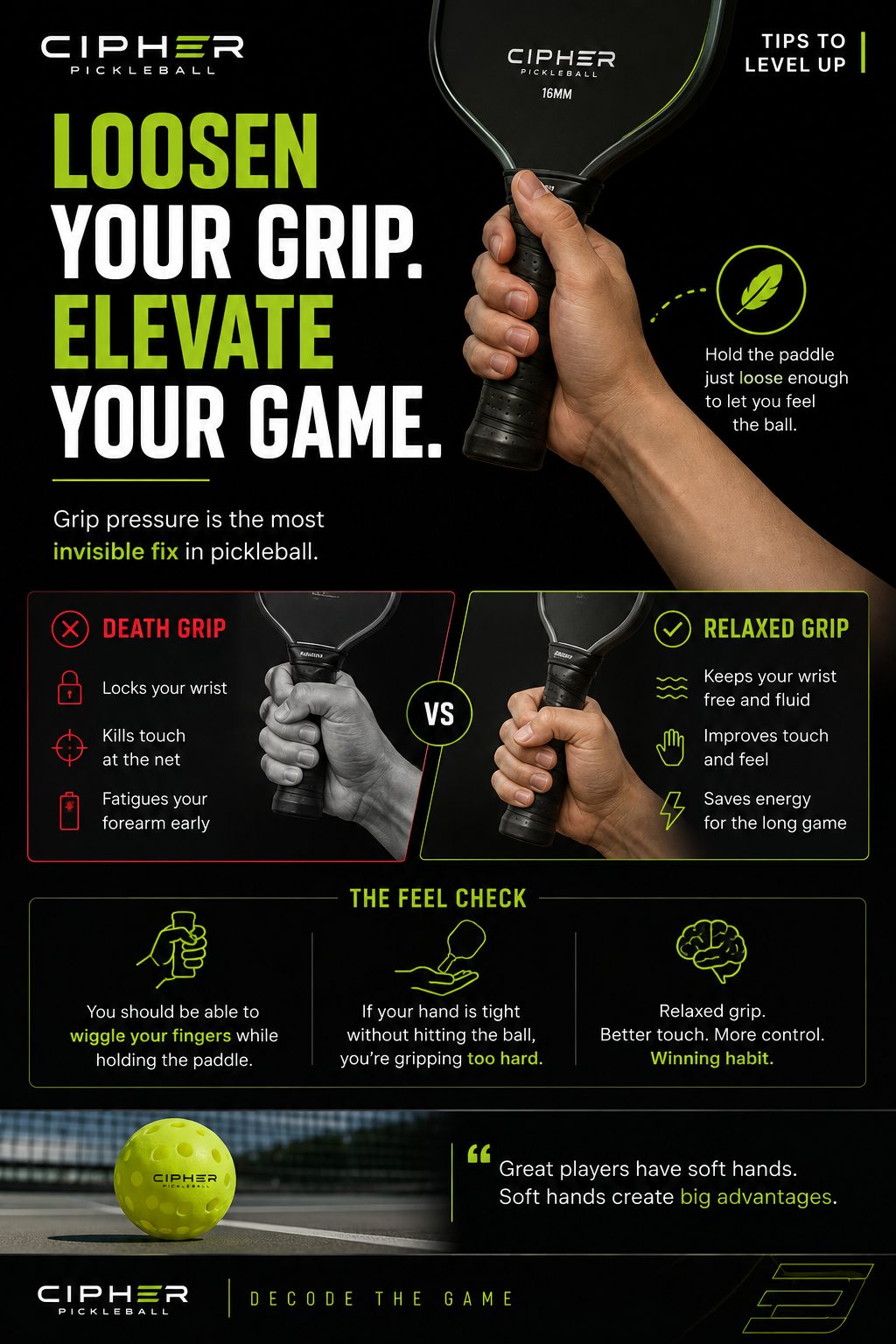
Tip 05 — Loosen your grip
Grip pressure is the most invisible fix in pickleball, and one of the biggest. A death grip locks your wrist, kills touch at the net, and tires your forearm out mid-game. Hold the…